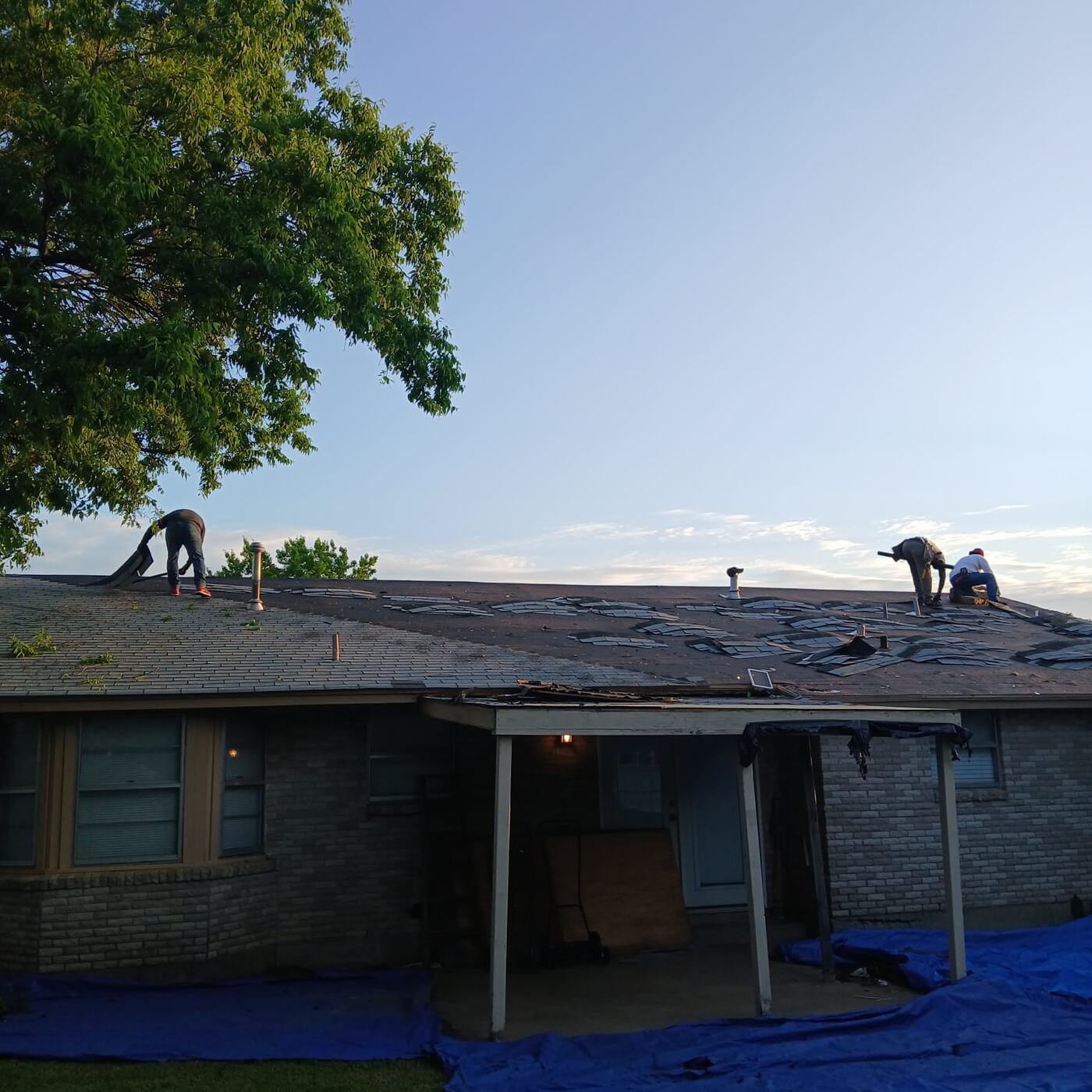
Check from the ground first
Don't climb onto the roof yourself. You can learn a lot from the yard and the driveway:
- Gutters and downspouts. Dents or dings in metal gutters and downspouts mean hail big enough to mark the roof too.
- Granules. A pile of sandy grit at the bottom of a downspout is shingle granules knocked loose.
- Roof vents and flashing. Dents in metal vents are often visible from the ground.
- The air conditioner. Bent fins on the outdoor unit are another sign the hail was hard.
- Missing or torn shingles, and shingle pieces in the yard after high wind.
Inside, check the ceilings on the top floor and, if you can do it safely, the attic for new water stains.
When to get an inspection
If you see dents on metal, granules piling up, or missing shingles, have the roof inspected. Hail damage doesn't always leak right away, but it can shorten the life of a roof. Ask for photos of what's found and a written bid.
What Texas law says about deductibles
After a storm, some contractors offer a "free roof" or promise to cover your deductible. The Texas Department of Insurance is clear on this:
- Texas law requires you, the policyholder, to pay your deductible, and your insurance company can ask for proof that you did.
- It's illegal for a contractor to offer to waive, rebate or absorb your deductible.
- A contractor who is doing or may do the work can't act as your public adjuster on the claim.
The department suggests reporting violations to the Texas Attorney General. You can read its guidance on the Roofing and insurance: Know the law page.
Tips for hiring after a storm
- Get the scope and price in writing before work starts.
- Be wary of anyone who offers to cover your deductible or handle your claim for you.
- Don't sign a contract with blanks in it.
- Don't pay in full up front.
See photos of roof work on our roof repair and replacement page.