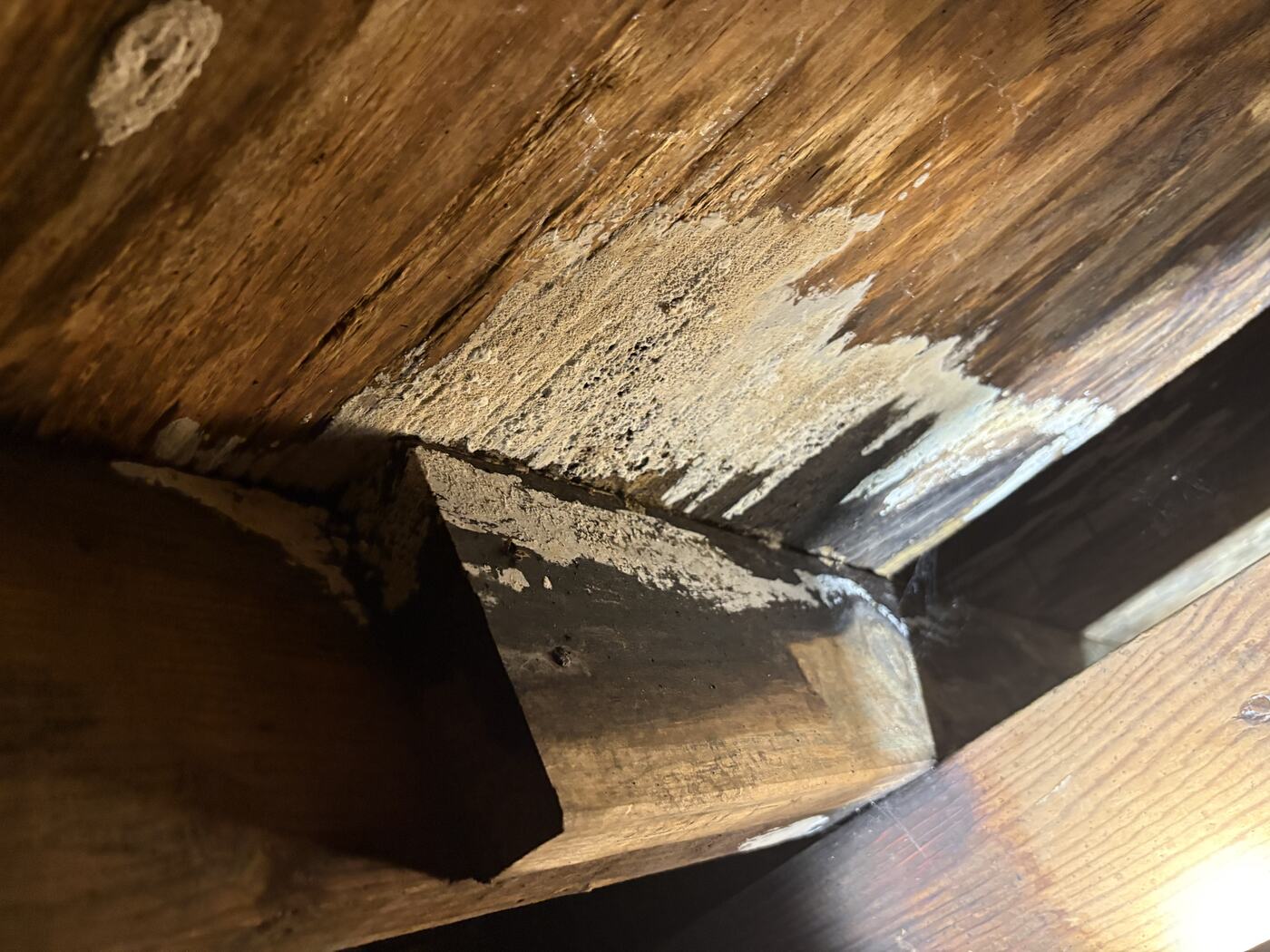
Why crawl spaces get damp here
Most older crawl spaces are vented to the outside. The idea is that air moving through keeps things dry. In a North Texas summer, though, the outside air is hot and humid. When it reaches the cooler ground and ductwork under the house, the moisture in it condenses. Add rain that drains toward the house, and the crawl space can stay damp for most of the year.
Signs of a moisture problem
- A musty smell inside the house, especially on humid days
- Damp ground or standing water under the house after rain
- Ducts or pipes that sweat
- Insulation sagging or falling between the joists
- Dark staining or soft spots on joists and the sill plate
What encapsulation involves
- Stop the water. Any drainage problem or plumbing leak gets fixed first. Sealing a crawl space that still takes on water just traps it.
- Repair the damage. Rotted joists, sill plate and subfloor are replaced.
- Seal it. A heavy vapor barrier is laid over the ground and up the walls, and the seams are sealed. The vents are closed off.
- Keep the air dry. Many encapsulated crawl spaces also get a dehumidifier to keep the humidity down in summer.
When it makes sense, and when it doesn't
Encapsulation is worth considering if the crawl space smells, stays damp, or has wood damage from moisture. If the crawl space is dry and the only issue is a little water after heavy rain, fixing the drainage may be all it needs.
One thing not to do: close the vents without sealing the ground and controlling the moisture. That can trap damp air under the house and make things worse.
A note about mold
Damp crawl spaces sometimes have mold on the wood. In Texas, removing 25 contiguous square feet or more of visible mold generally requires a licensed mold remediator. If an inspection finds that much, bring in a licensed remediator before or alongside the repair work.
For photos of this kind of work and what's included, see our crawl space repair and encapsulation page.