Start with a free inspection and a written bid
Most foundation companies in Dallas-Fort Worth will inspect your house for free. What matters is what you get afterward. A useful bid says how many piers, where they go, what type they are, and the price. A single number with no scope can't be compared to anything. Photos of what the inspector found help you see the problem for yourself, and if a company tells you nothing needs fixing, that's worth hearing too.
Compare the pier type, not just the price
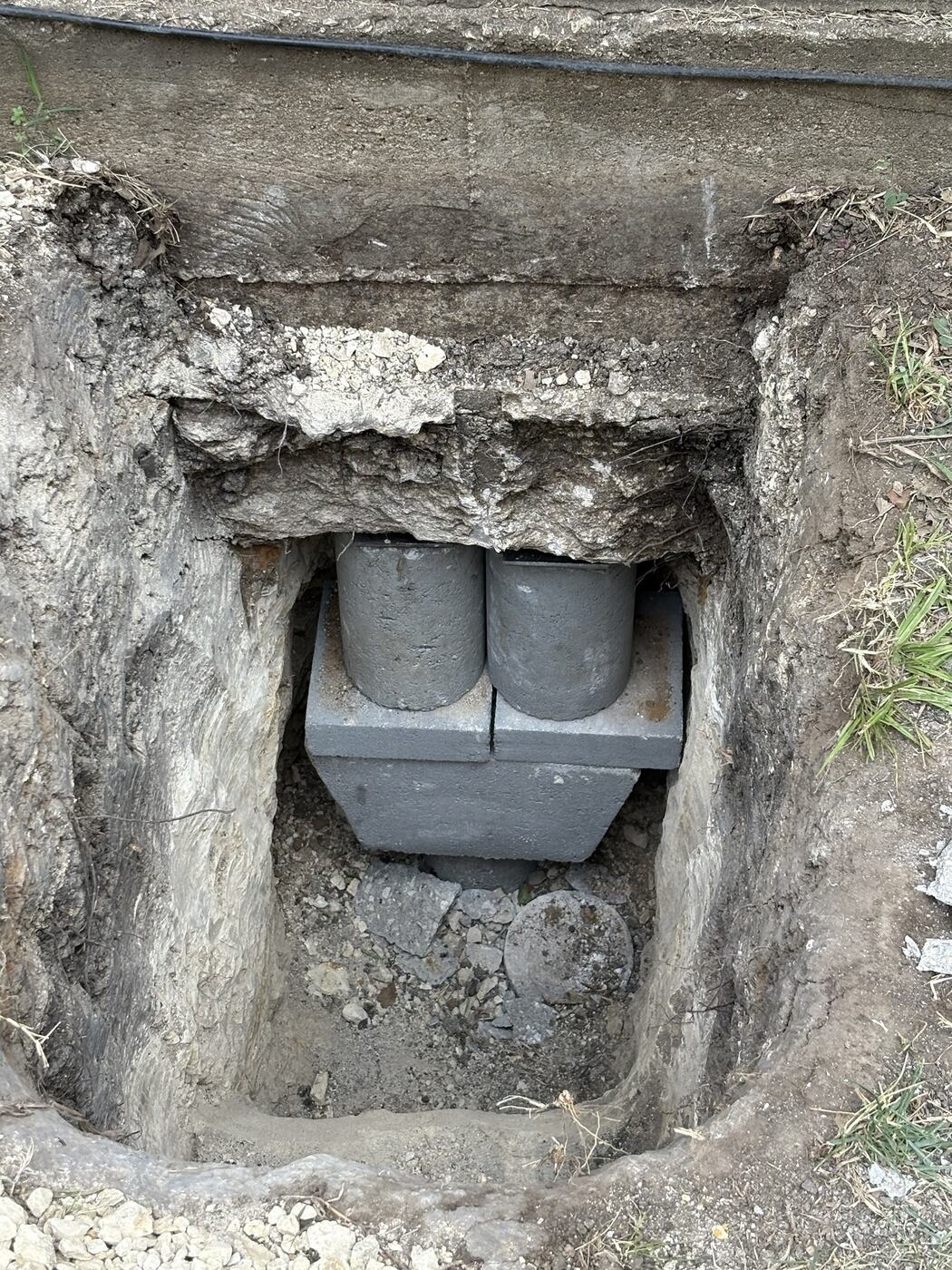
Most slab repairs in North Texas use one of three kinds of piers:
- Pressed concrete piers. Concrete cylinders are pressed into the ground one on top of another until they won't go any deeper. This is the most common choice in DFW and usually the least expensive.
- Steel piers. Steel pipe is driven deeper, often until it reaches a firm layer of soil or rock. They usually cost more per pier.
- Drilled concrete piers. A hole is drilled and filled with concrete and steel, sometimes with a wider bell at the bottom. These are usually the most expensive and take the longest.
Two bids with different pier types aren't apples to apples. Ask each company why they chose that type for your house. Our cost guide has typical DFW prices.
Ask how many piers, and why
A bid with more piers than another isn't automatically padded, and one with fewer isn't automatically a bargain. Ask each company to show you the low areas they found and explain where each pier goes and why. A good bid covers what the inspection found and nothing more.
Read the warranty closely
- How long it lasts. Get the term in writing.
- What it covers. Most foundation warranties cover adjusting the piers if that part of the house settles again. Ask whether cracks in brick or drywall, plumbing, or the rest of the slab are covered.
- Whether it transfers. A warranty that passes to the next owner helps when you sell. Ask whether there's a fee or paperwork to transfer it.
- Who stands behind it. The warranty should come from the company that does the work.
Ask about permits and engineer letters
Many DFW cities require a permit for foundation repair, and some go further. Denton, for example, requires a repair plan signed and sealed by a Texas registered engineer before it issues the permit. Ask each company who pulls the permit and whether an engineer's letter is included or costs extra. If you might sell in the next few years, paperwork showing what was done is worth having for the buyer. Our guide for agents explains why.
Ask about a plumbing test
A leaking pipe under a slab can soak the soil and cause the house to move, and lifting a slab can stress old pipes. Many companies recommend a plumbing test before or after leveling, especially in older homes. Ask whether the bid includes one or whether you'll need to call a plumber.
Texas doesn't license foundation repair companies
Texas has no state license for foundation repair contractors, so there's no license number to look up. That makes the rest of this list matter more: how long the company has been doing this work, what its customers say, a written scope and a written warranty.
Red flags
- Pressure to sign today, or a price that's only good if you sign right now.
- No written scope, or a scope that keeps growing after the inspection.
- Scare tactics instead of an explanation of what they found.
- Asking for most of the money before the work starts.
- Offering to waive or cover your insurance deductible. Texas law doesn't allow it. More in our post on whether insurance covers foundation repair.
Questions to ask every company
- How many piers, where do they go, and what type are they?
- Why that type of pier for my house?
- Can I see photos of what you found?
- How long is the warranty, what does it cover, and does it transfer if I sell?
- Who pulls the permit, and is an engineer's letter included?
- Do you recommend a plumbing test?
- How long will the work take, and what happens to my yard and landscaping?
How we handle it
Lone Star Foundation Co. lines up foundation, crawl space and roof repairs with Allied Foundation LLC, the crew that inspects and does the work. The inspection is free and comes with photos. If the house doesn't need work, you'll hear that. If it does, the written bid lists the piers, where they go and the price, and covers what the inspection found, nothing added. Allied's written warranty transfers to the next owner if you sell. You're welcome to compare it with any other bid you get.