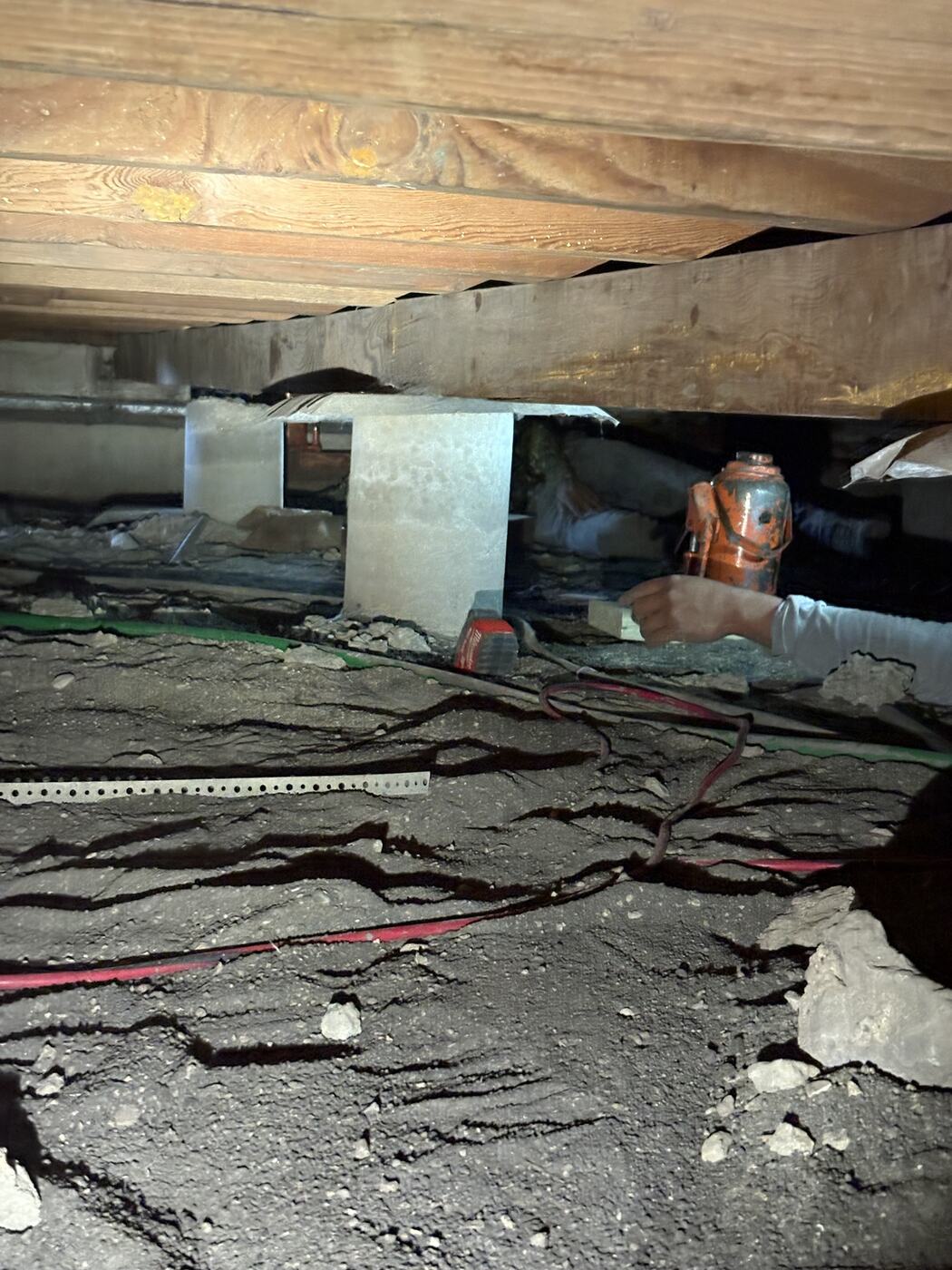
How a pier-and-beam floor is held up
In a pier-and-beam house, the floor sits on wood joists. The joists rest on beams, and the beams rest on piers, short columns of concrete or block set in the ground. Wood shims fill the small gaps between the piers and the beams. A crawl space under the house gives access to all of it.
Lots of older homes in Dallas, Fort Worth and the surrounding towns are built this way. It's a good system, but every part of it can wear out.
The usual causes
Piers that settle
Piers sit in the same clay soil that moves slab foundations. Over the years some sink more than others, and the beam above them sags with them. The floor slopes toward the low piers.
Shims that dry out or slip
Wood shims shrink as they dry and can work loose. Each one that slips lets the beam drop a little. That's why a floor that was shimmed a few years ago can sag again.
Moisture and rot
A damp crawl space softens joists, the sill plate along the outside walls, and the subfloor. Rotted wood bends under load, which you feel as a soft or bouncy spot. Kitchens and bathrooms, where plumbing leaks are common, are often the worst.
Joists that were cut or are too small
Joists notched or cut for plumbing over the years, or joists that were small to begin with, can bounce even when the piers are fine.
How to tell what you have
- A floor that slopes steadily toward one area usually points to settled piers or slipped shims.
- A soft or spongy spot in one room usually points to rotted joists or subfloor.
- A musty smell or damp air from under the house points to a moisture problem that's likely affecting the wood.
The only way to know for sure is to look in the crawl space.
What the repair usually involves
- New concrete piers where the old ones have failed
- The beam jacked back toward level and re-shimmed
- Rotted joists, sill plate and subfloor replaced
- The moisture source fixed, so the new wood doesn't rot too
Most of this is done from the crawl space. If the framing under a room is badly rotted, that part of the floor may have to come up. See our pier-and-beam repair page for photos of this kind of work.