Why it matters
The clay under most Dallas-Fort Worth homes swells when it's soaked and shrinks as it dries. When water keeps collecting on one side of the house, the soil on that side goes through bigger swings than the rest, and the foundation moves unevenly. Under a pier-and-beam house, that same water ends up in the crawl space.
First, find where the water comes from
Walk around the house during or right after a good rain. Look for:
- Downspouts emptying right at the foundation
- Gutters overflowing at corners
- Ground or flower beds sloping toward the house
- Water running across the yard from a neighbor's lot or a higher part of yours
Option 1: Gutters and downspout extensions
If most of the water comes off the roof, this is usually the fix. Clean gutters and extend the downspouts so they release water several feet from the house, onto ground that slopes away.
Option 2: Regrading
If the ground next to the house is flat or slopes toward it, it needs to be reshaped. The residential building code most North Texas cities use calls for the ground to drop at least 6 inches within the first 10 feet from the foundation. Flower beds built up against the house are a common culprit.
Option 3: A French drain
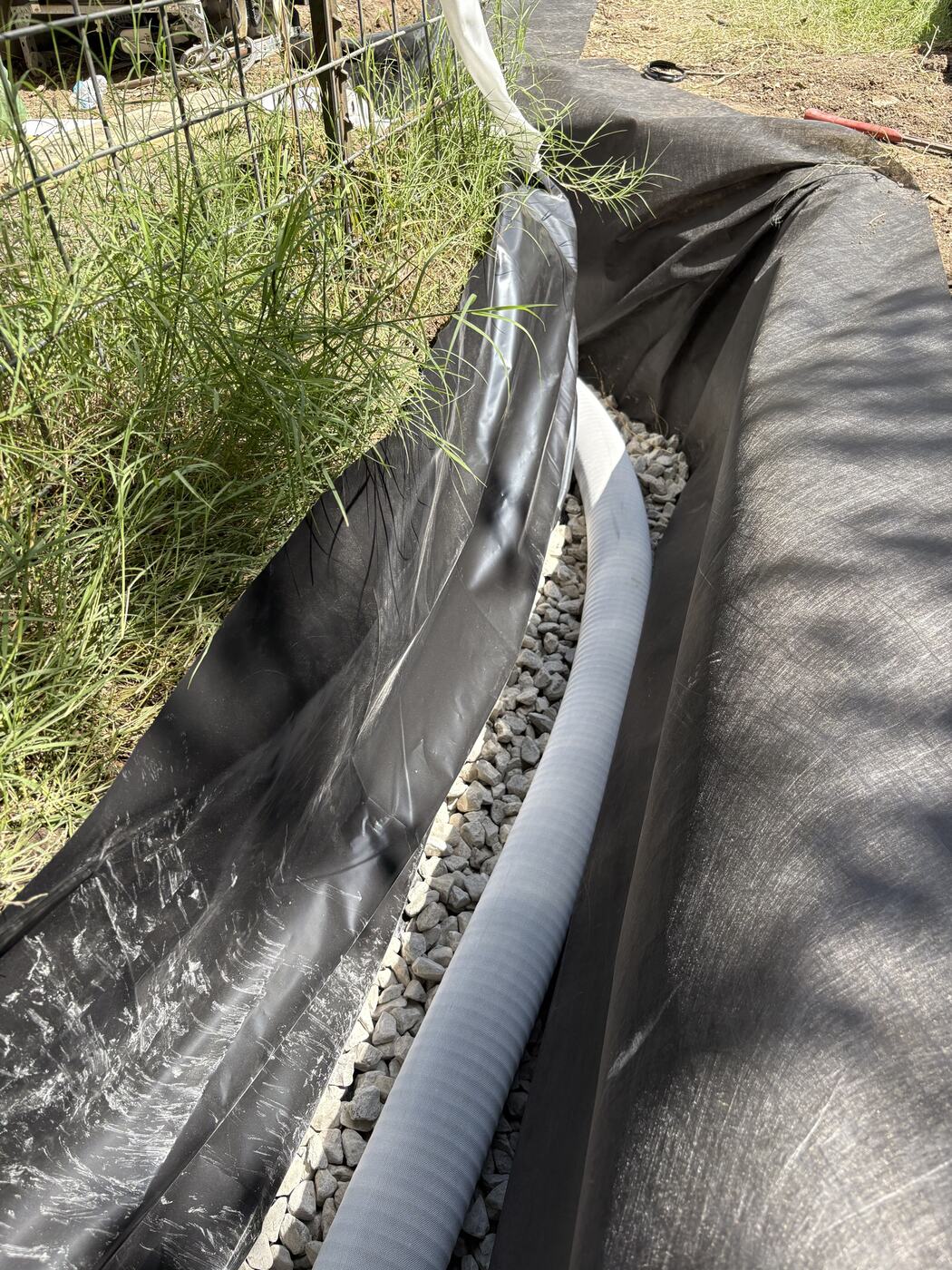
When water runs across the yard toward the house, or when there isn't room to regrade, a French drain catches it and carries it away. It's a trench lined with filter fabric and filled with gravel around a perforated pipe. Water soaks into the gravel, enters the pipe, and flows to a spot where it can drain away from the house. Where that spot can be depends on your lot and on city rules.
What drainage won't do
Better drainage won't lift a slab that has already settled. It cuts down on the soil movement that causes more settling, so it's often done alongside a foundation repair or soon after.
See photos of French drain work on our drainage page.