The clay under North Texas
Much of Dallas-Fort Worth is built on clay soil. Clay acts like a sponge: it takes on water and swells, then gives it up and shrinks. That's true of a lot of the ground across the region, from the older neighborhoods in Dallas and Fort Worth out to the newer subdivisions in Collin, Denton and Ellis counties.
A foundation can handle soil that moves evenly. The trouble starts when the soil under one part of the house moves more than the rest.
What makes the soil move unevenly
- Water that collects on one side. A downspout emptying at a corner, or a yard that slopes toward the house, keeps one side wetter than the others.
- Long dry spells. In a hot, dry summer the soil around the edge of the slab dries and pulls away, while the soil in the middle stays damper.
- Trees close to the house. Large trees pull a lot of water out of the ground near their roots, so the soil on that side can dry out faster.
- Plumbing leaks. A slow leak under or next to the slab can soak one area for months before anyone notices.
Warning signs
The foundation itself rarely shows the problem first. The house does:
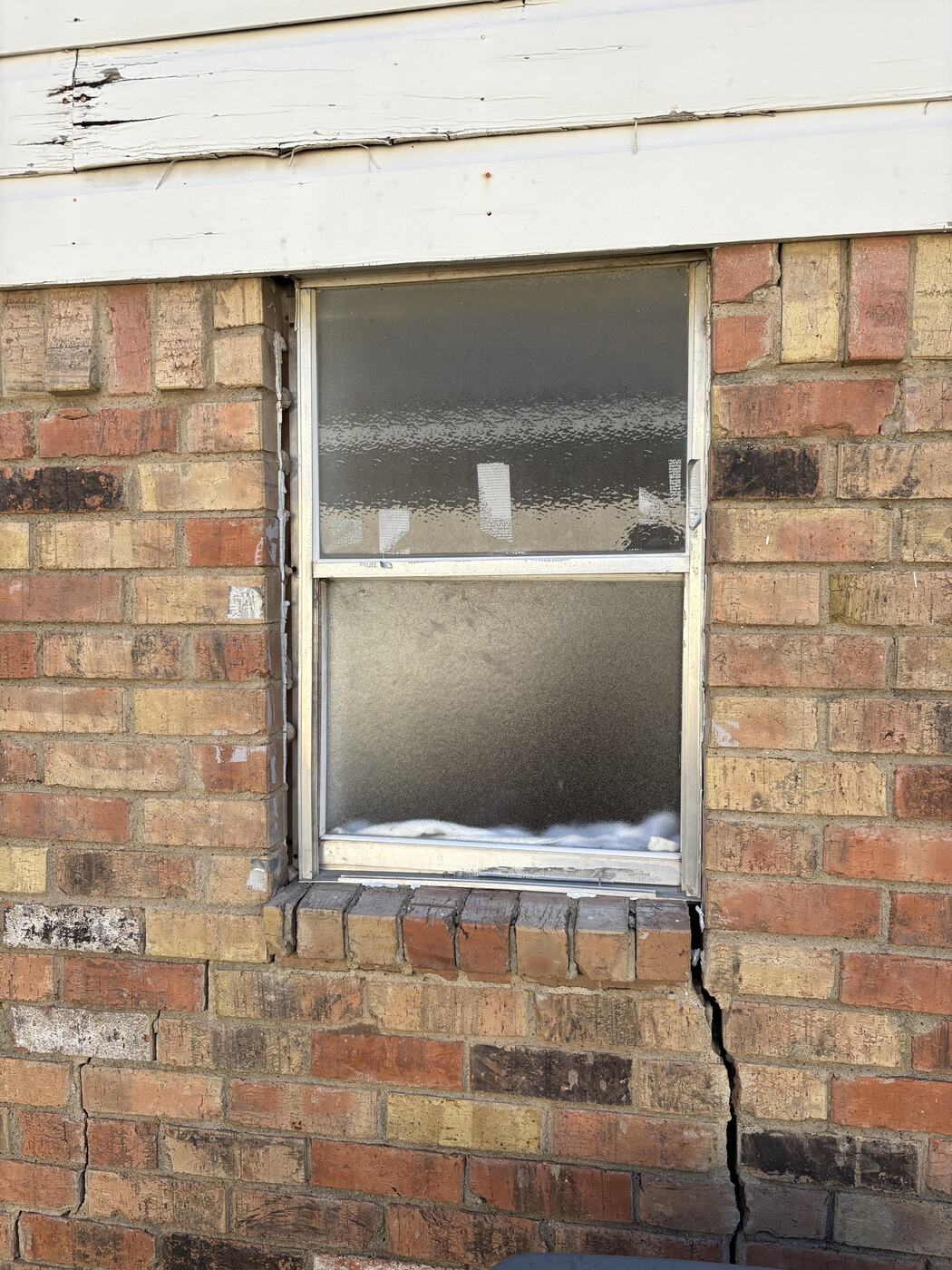
- Stair-step cracks in brick, often below windows or at corners
- Cracks in drywall above doors and windows
- Doors that stick or won't latch, and windows that bind
- Gaps between the brick and window or door frames
- Floors that slope
One small crack doesn't always mean trouble. Several of these signs together, or cracks that keep growing, are worth having someone look at.
What homeowners can do
- Make sure gutters and downspouts carry water several feet away from the house.
- Check that the ground slopes away from the foundation. The residential building code most North Texas cities use calls for at least 6 inches of drop in the first 10 feet.
- During long dry spells, keep the soil around the foundation from drying out unevenly. Many North Texas homeowners use a soaker hose a short distance from the slab.
- Have plumbing leaks fixed quickly.
None of these will lift a slab that has already settled. They reduce the movement that causes more settling.
When it's time for an inspection
If you're seeing several warning signs, or a crack that's getting wider, a free inspection will tell you whether the slab has settled, where, and what it would take to fix it. Settled slabs are usually repaired with pressed concrete piers, which you can read about on our slab foundation repair page.