How each one works
A slab is a thick concrete pad poured directly on the ground, with the house built on top. Inspectors in Texas typically list it as either a conventionally reinforced slab (steel rebar) or a post-tensioned slab (steel cables tightened after the concrete cures).
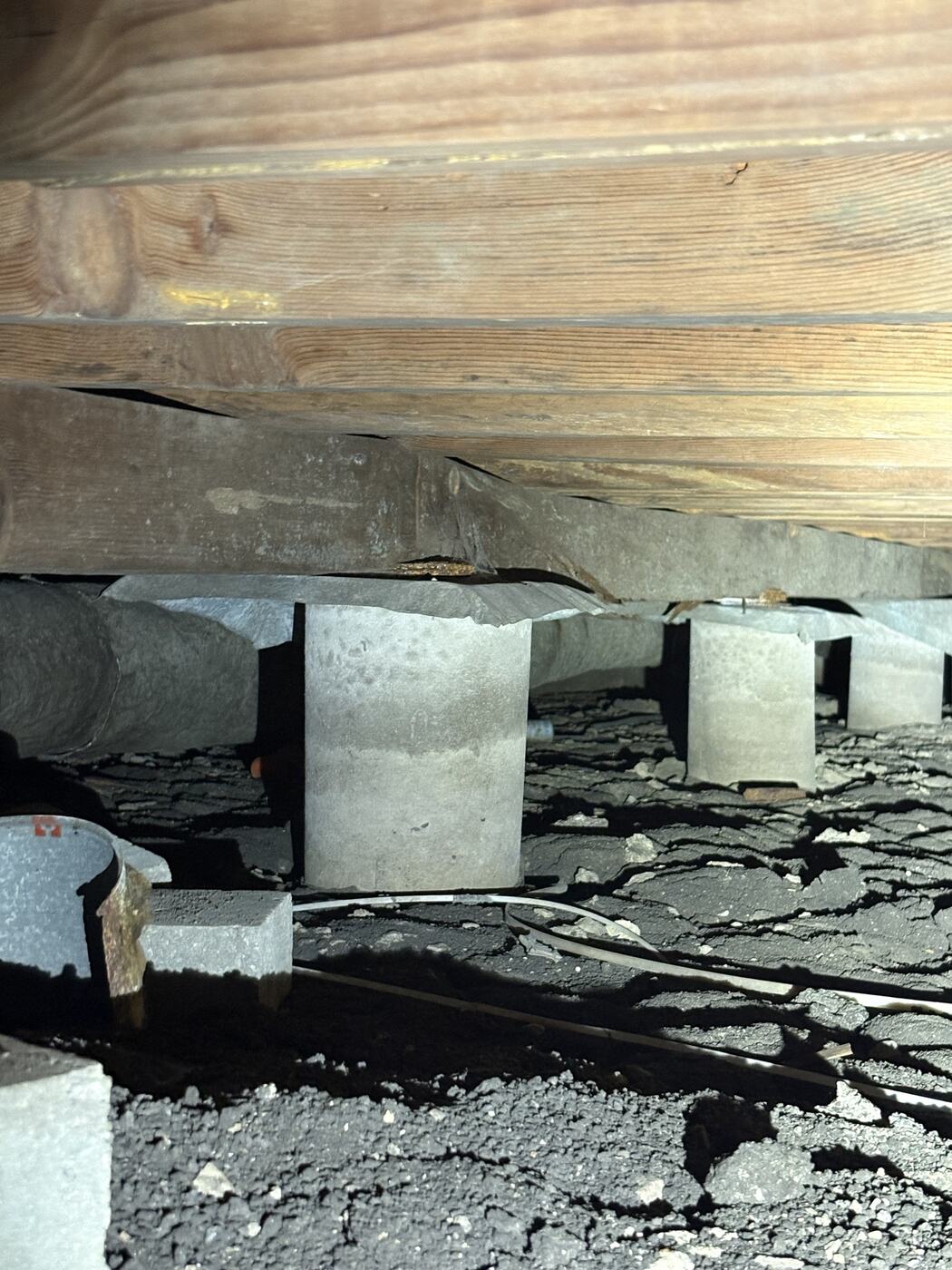
A pier-and-beam foundation holds the house up off the ground. Concrete piers support beams, the beams support the floor joists, and there's a crawl space underneath you can get into.
Common problems with slabs
- One side or corner settles as the clay dries out or gets soaked unevenly
- Stair-step cracks in brick, cracks above doors, sticking doors
- Plumbing runs under the slab, so leaks can be hard to find and can soften the soil underneath
The usual repair is pressed concrete or steel piers along the settled area, lifting the slab back toward level.
Common problems with pier and beam
- Piers that sink and shims that dry out and slip, so floors slope or sag
- A damp crawl space that rots joists, the sill plate and subfloor
- Soft or bouncy spots in kitchens and bathrooms
The usual repair is new piers, re-leveling and replacing rotted framing, often along with fixing moisture in the crawl space.
Upsides of each
- Pier and beam: easier to reach plumbing and wiring, easier to re-level, and most repairs are done from the crawl space without tearing up floors.
- Slab: no crawl space to keep dry and no wood framing near the ground, so moisture and pest problems under the house are less of a concern.
What to check when buying
- Read the foundation section of the inspection report closely. Here's how to read it.
- Ask whether the foundation has been repaired before, and get the invoice and warranty, including whether it transfers.
- Walk the outside: water should drain away from the house, and downspouts shouldn't empty against the foundation.
- For pier and beam, ask how the crawl space looked: dry or damp, and whether there was rot or standing water.
Either way, a free inspection gets you photos and a written answer. See also why foundations move in Dallas-Fort Worth.